Every wastewater treatment plant operator eventually faces the same question: what is the most effective, cost-efficient way to dewater our sludge? For decades, sand drying beds were the default answer for small and mid-sized plants. Today, stainless steel wedgewire filter beds — like the Wedgewater™ system — offer a compelling alternative. This article compares the two technologies head-to-head so you can make the right call for your facility.
How Sand Drying Beds Work
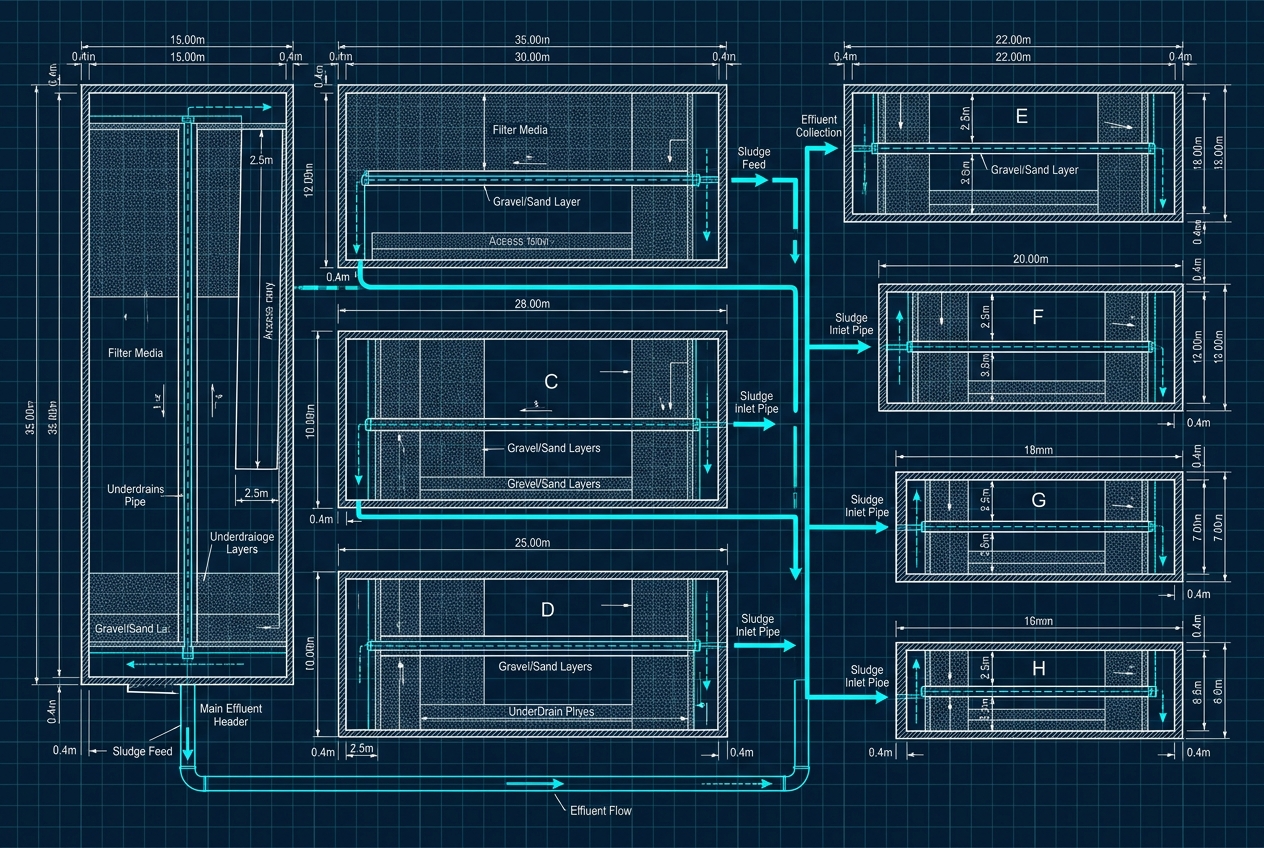
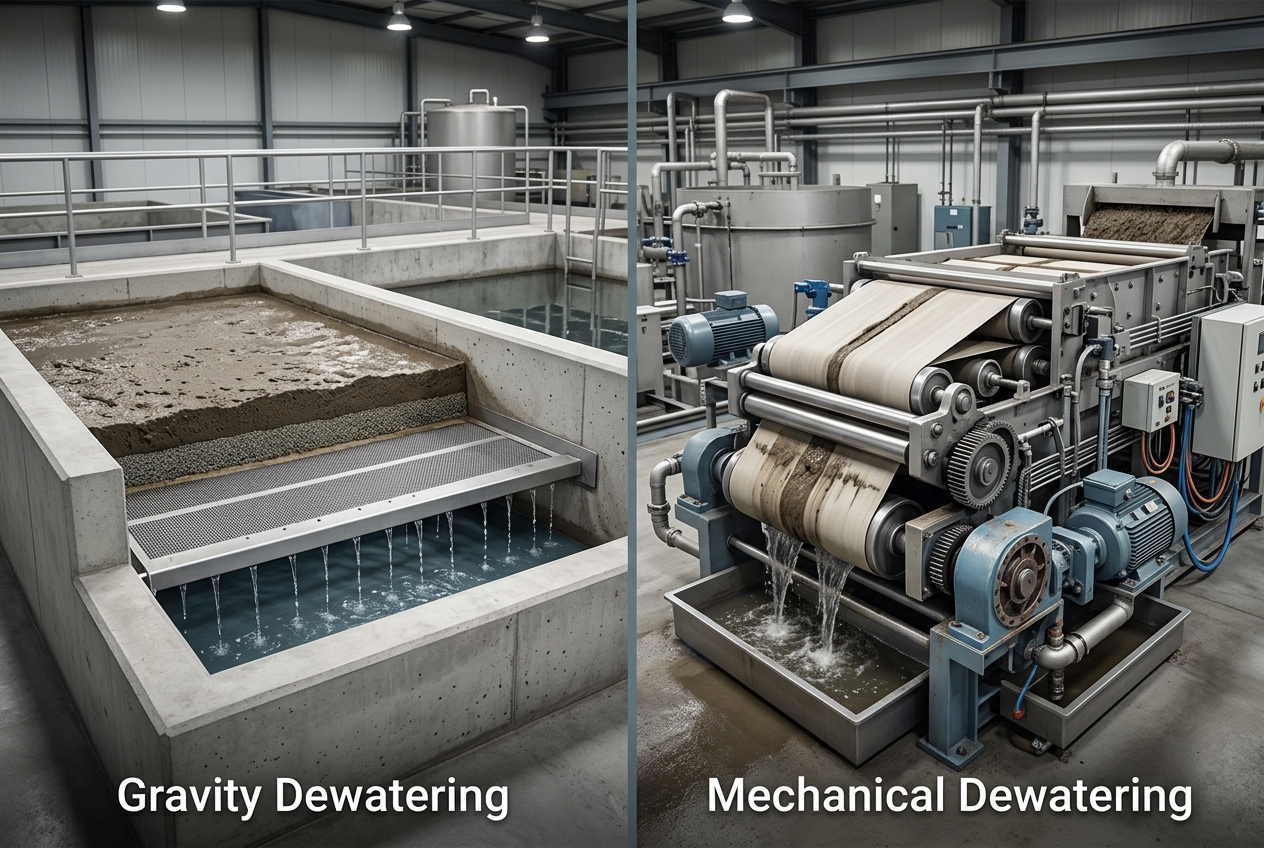
Sand drying beds have been a staple of municipal wastewater treatment since the early twentieth century. The design is straightforward: a shallow, open-air basin lined with successive layers of gravel and sand sits above an underdrain system. Liquid sludge is applied at a depth of 8–12 inches, and water drains downward through the media while the sun and wind evaporate surface moisture over time.
Typical dewatering cycles run 2 to 6 weeks, depending on sludge type, solids loading, and weather. Once the cake reaches acceptable solids content — usually 20–30% dry solids — crews remove it with a front-end loader, scraping the surface and hauling the material to a stockpile or land application site. The bed is then raked, inspected, and returned to service.
Sand beds require periodic media replacement as fines migrate downward and clog the underdrain. In climates with significant rainfall or freezing temperatures, cycle times stretch considerably, and covered beds become a necessity that adds capital cost.
How Wedgewater™ Filter Beds Work
The Wedgewater™ system replaces sand and gravel with precision-fabricated stainless steel wedgewire screens set in a structural frame. The open slot geometry of the wedgewire provides a much higher flow rate than sand while still retaining solids. Drainage is gravity-driven — no pumps, no pressure, no electricity required for the dewatering process itself.
Operation follows five repeatable steps:
- Apply — pump liquid sludge onto the bed surface to the design loading depth
- Drain — free water passes rapidly through the wedgewire and exits via the underdrain
- Dry — residual moisture evaporates from the exposed cake surface
- Remove — dry cake is scraped off with a tractor blade or manually with shovels; the hard wedgewire surface withstands mechanical removal without damage
- Repeat — the bed is immediately ready for the next cycle
Typical cycle times are 2 to 5 days under moderate conditions. The stainless steel media carries a service life of 30 or more years with no replacement under normal operating conditions.
Head-to-Head Comparison
| Factor | Sand Drying Beds | Wedgewater™ Filter Beds |
|---|---|---|
| Dewatering cycle | 2–6 weeks | 2–5 days |
| Media lifespan | 5–15 years (replacement needed) | 30+ years |
| Footprint for equal throughput | Large | 4–6× smaller |
| Routine maintenance | Media raking, replacement, underdrain inspection | Occasional screen inspection, minimal |
| Cake removal method | Front-end loader (risk of media damage) | Tractor blade or manual; media undamaged |
| Climate sensitivity | High — rain and cold extend cycles significantly | Moderate — drainage unaffected by rain |
| Operating cost | Low capital, higher lifecycle labor | Lower labor, minimal consumables |
| Capital cost | Lower initial investment | Higher upfront, lower 20-year total cost |
When Sand Beds Still Make Sense
Sand drying beds remain a reasonable choice in specific circumstances:
- Abundant available land — if footprint is not a constraint and land is cheap, sand beds spread the cost over a large area
- Extreme budget constraints — the lower upfront cost may be the deciding factor for small systems operating on thin margins
- Hot, dry climates — in arid regions with long dry seasons, evaporation accelerates drying to where the longer drainage phase matters less
- Very low sludge throughput — a facility generating only a few hundred gallons per day may not benefit economically from stainless media
When Wedgewater™ Beds Win
For most plants weighing a new installation or a replacement, Wedgewater™ filter beds are the stronger long-term choice:
- Limited space — the dramatically shorter cycle time means far fewer square feet required for equal annual throughput
- Labor costs matter — fewer cycles per year and faster cake removal reduce operator hours meaningfully
- Variable or wet climate — drainage performance is decoupled from evaporation, so rain events don’t reset the clock
- Long-term cost focus — 30-year media life versus repeated sand replacement shifts the economics decisively
- Reliability is critical — no moving parts and no consumable media means fewer failure modes and more predictable operation
The Bottom Line
Sand drying beds are a proven, simple technology — but their long cycle times and large footprint increasingly don’t fit the constraints facing modern treatment plants. Wedgewater™ filter beds deliver faster throughput, smaller footprint, and lower lifecycle cost at the price of higher initial capital. For most facilities with normal space and labor constraints, the math favors stainless wedgewire.
Ready to evaluate whether a Wedgewater™ system is right for your plant? Contact our engineering team or request a quote and we’ll walk through your specific application.
Related: Wedgewater™ Filter Bed product page | Wedgewater™ vs. Sand Drying Beds comparison