Municipal wastewater treatment plants have an underutilized opportunity sitting at their gate: septage. Residential septic tanks, portable restrooms, RV holding tanks, and grease traps all generate waste that needs somewhere to go. Plants that accept it can turn what would otherwise be an unmanaged stream into a revenue source — while providing a genuine service to their community. Setting it up correctly takes some upfront planning. Here’s what you need to know.
Why Accept Septage
The business case for septage receiving is straightforward:
Revenue from tipping fees. Haulers pay a per-gallon or per-load tipping fee to discharge at the plant. Fees typically range from $0.02 to $0.08 per gallon depending on region and waste type. A plant accepting 20,000 gallons per week at $0.04/gallon generates over $40,000 annually in tipping revenue with relatively modest infrastructure investment.
Quality control over local disposal. Septic haulers without a permitted receiving point may be illegally dumping — in drainage ditches, on farmland, or in other locations. A formal receiving facility gives haulers a legitimate option and gives regulators a traceable record.
Community service. Rural and suburban communities with high septic system density often lack adequate disposal infrastructure. A receiving facility at the municipal plant fills that gap.
Regulatory Framework
Operating a septage receiving facility triggers regulatory requirements at three levels.
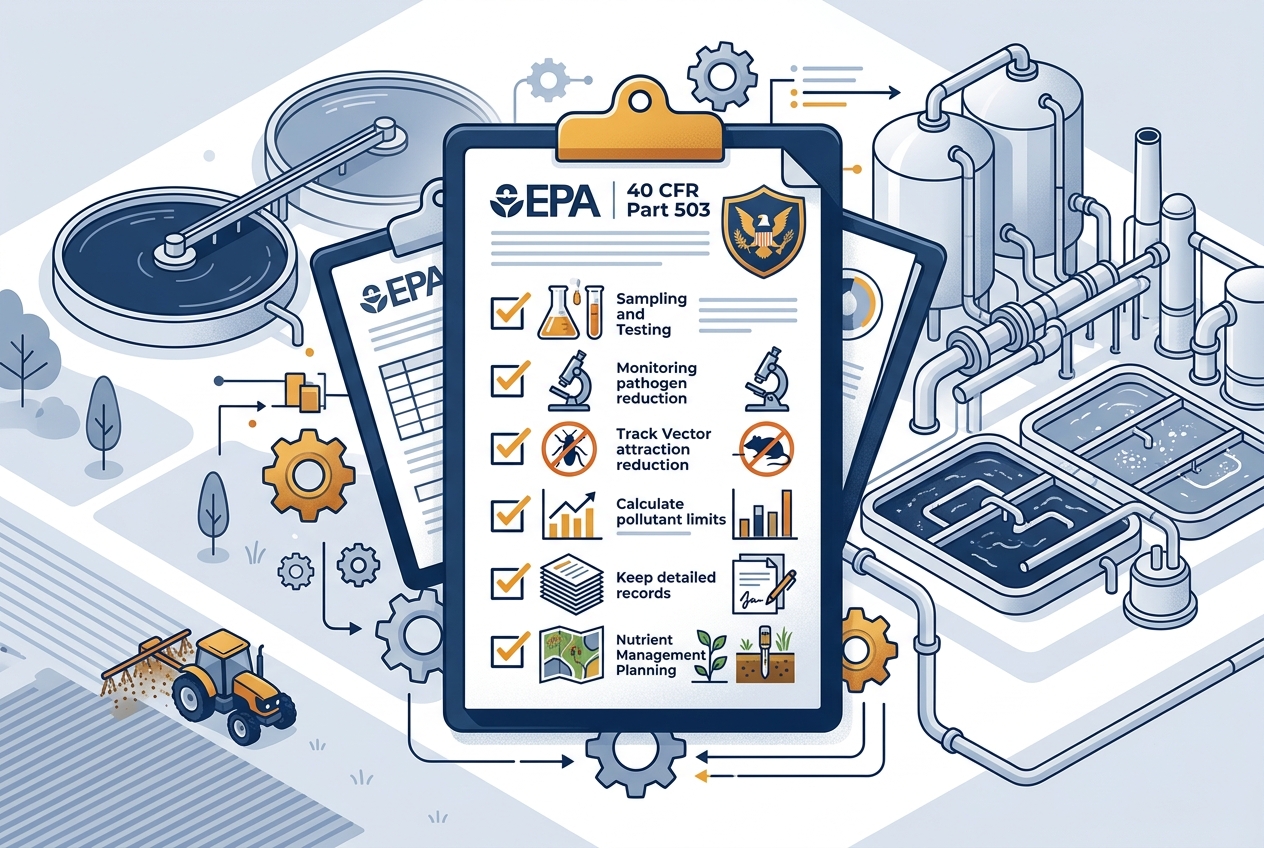
Federal — 40 CFR Part 503: Septage is explicitly addressed in the rule. It can be land-applied under Part 503 requirements (see our plain-language guide to 40 CFR Part 503 for the full breakdown), treated in the plant’s liquid stream, or co-composted with other biosolids. Pathogen reduction and vector attraction reduction requirements apply to the end product regardless of where the septage enters the process.
State permits: Most states require a specific permit modification or approval before a plant can begin accepting septage. The state environmental agency will want to see your receiving equipment design, sampling plan, volume limits, and how the waste will be treated. Lead time for permit approval varies widely — plan for 90 to 180 days in most states.
Local ordinances: Some municipalities have zoning or operating ordinances that address odor, truck traffic, and hours of operation. Check with your local government before committing to a design.
Site Design
Good site design makes the operation safer, cleaner, and easier to manage. Key considerations:
Truck access. Vacuum trucks are large vehicles — typically WB-50 or WB-62 design vehicle class. Your access drive and maneuvering area must accommodate a 50–62 foot wheelbase. Plan for a minimum 60-foot turning radius at the receiving pad approach. Pavement must handle axle loads of 40,000 lbs or more.
Paved receiving pad. The area where trucks back in and connect to the receiving system must be paved — typically concrete — sloped to a drain. Spills are inevitable; the pad must contain them and drain to the plant’s collection system, not to a storm drain.
Secondary containment. If your receiving tank or holding basin is above grade, secondary containment berm sized for 110% of the tank volume is standard engineering practice and often required by permit.
Signage. Clear directional signage from the plant entrance to the receiving station, plus operational signage at the pad itself (flow meter location, emergency shutoff, manifest station).
Receiving Equipment
The simplest approach is a receiving manhole or vault that discharges directly to the headworks. This works for low-volume operations but offers no screening, no flow metering, and no way to reject a bad load once the discharge valve opens.
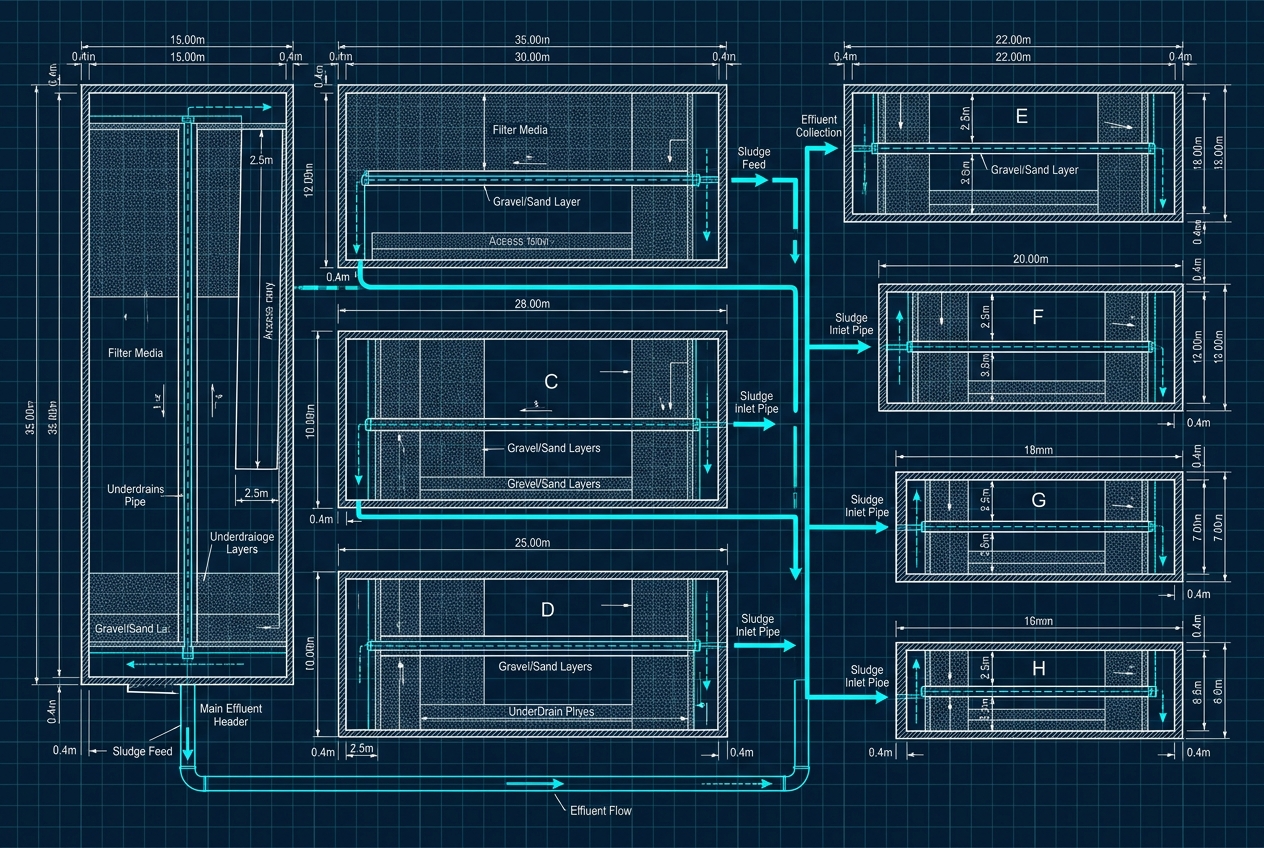
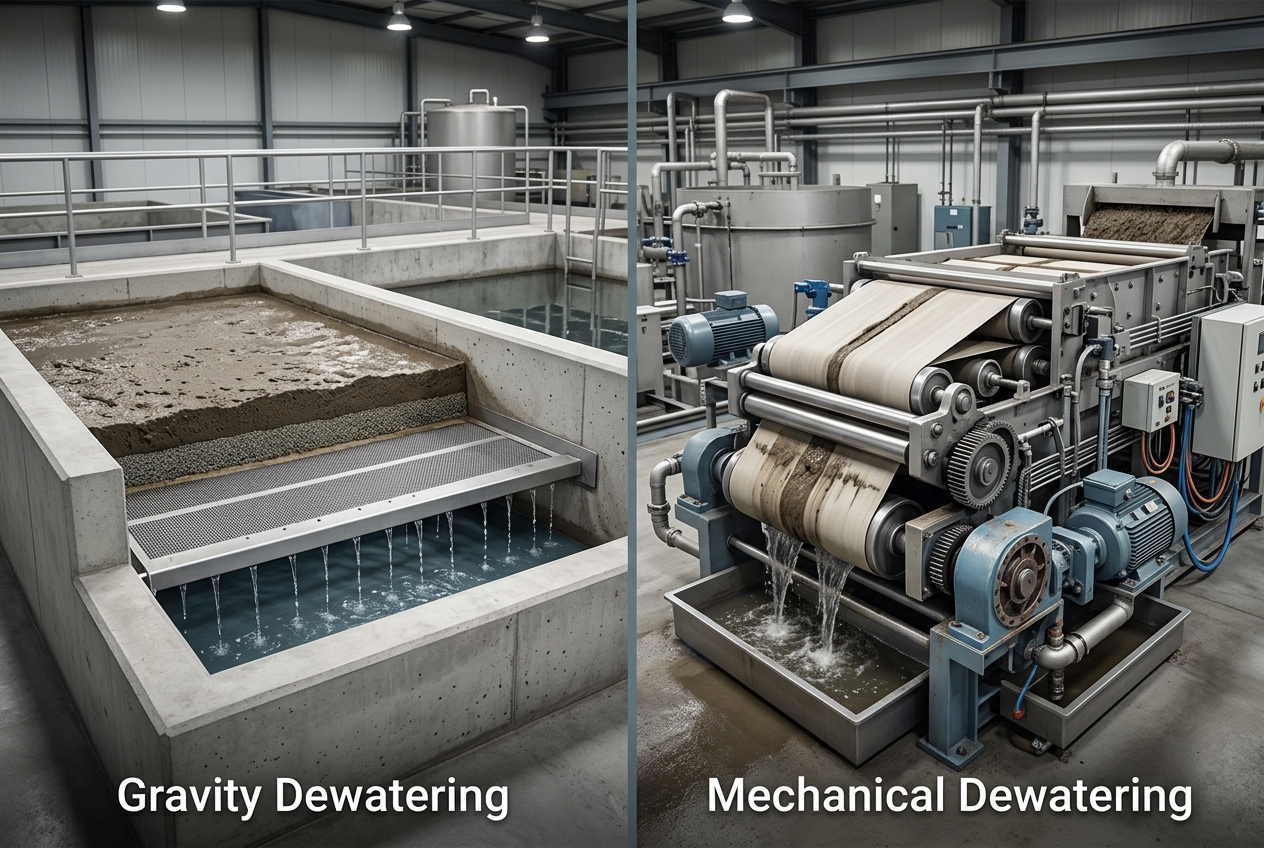
The recommended approach for any plant planning to accept more than occasional loads is a dedicated vacuum truck waste receiving bed with wedgewire screens. This type of equipment provides:
- Coarse screening to capture rags, wipes, and solids that would otherwise reach your headworks and plug pump stations or clog fine screens
- Controlled discharge rate so the septage enters the plant at a rate the treatment process can absorb
- A visual inspection point where operators can observe each load before it enters the system
- Easy cleanout when rags and debris accumulate on the screen surface
The wedgewire screen in a GFSS vacuum truck waste bed is the same corrosion-resistant stainless steel used in our Wedgewater™ filter beds — rated for decades of service in the harsh septage environment.
Monitoring and Controls
A properly equipped receiving station includes:
Flow measurement. An inline flow meter or totalizer records the volume of each load received. This data feeds your permit reporting and your tipping fee invoicing.
Sampling port. A sampling tap before the discharge valve lets you pull a composite sample of each load. Some states require routine sampling; at minimum, you want the ability to sample any load that looks or smells suspicious.
Manifest station. A covered kiosk or lockbox where haulers drop completed waste manifests. Some plants use a tablet-based electronic system instead.
Emergency shutoff. A clearly marked valve or gate that allows an operator to immediately stop discharge from the receiving station. Essential for load rejection and plant upsets.
Operational Best Practices
Hauler Management
Establish an authorization program before you open the gate. Require haulers to:
- Submit a hauler application and sign your receiving agreement
- Provide proof of state pumper license and liability insurance
- Understand and acknowledge your accepted waste types and prohibited materials list
Keep a current authorized hauler list and review it annually.
Load Screening
Every load should be evaluated before acceptance:
- pH check — septage should fall between 6.0 and 10.0; extreme values suggest chemical contamination
- Conductivity or visual check — unusually high conductivity or non-typical appearance (wrong color, oily sheen) warrants rejection or at minimum a hold-and-test
- Visual inspection at discharge — the operator should observe the material entering the receiving equipment for obvious contamination
Rejected loads should be documented. Repeated rejection of the same hauler should trigger a conversation with your state environmental agency.
Record-Keeping
Maintain a receiving log for every load that enters the facility. At minimum, record:
- Date and time of receipt
- Hauler name and license number
- Source address (septic tank location or other origin)
- Volume received (gallons)
- Any sampling results
- Load acceptance or rejection decision
These records support your annual Part 503 reporting and are your first line of defense in any enforcement inquiry.
Ready to design your septage receiving facility? Request a quote and our team will help you select the right equipment for your volume and site constraints.
Related: Vacuum Truck Waste Receiving Bed | Understanding 40 CFR Part 503